
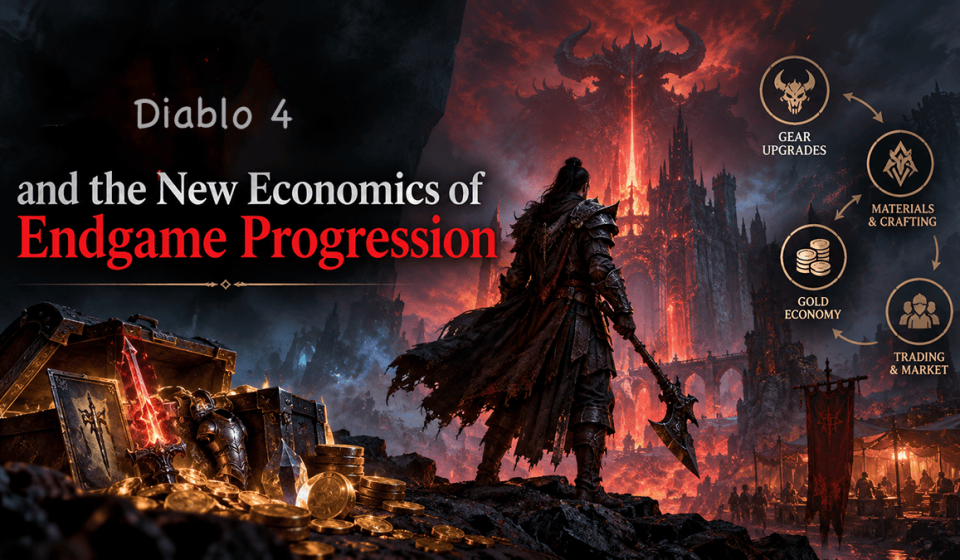
Diablo 4 and the New Economics of Endgame Progression
Diablo 4 has always been built around the simple pleasure of finding something better.
A legendary item drops. A useful affix appears. A build suddenly starts working the way you imagined it should. Then the cycle begins again: push into harder content, collect better gear, refine your stats, and chase the next upgrade.
But as Diablo 4 continues to evolve, the way players think about progression is changing. Endgame progression is no longer just about how powerful a character can become. It is also about how players manage their time, resources, gear priorities, and the increasingly complex economy surrounding character development.
That is where the conversation around buy Diablo 4 items has become more interesting. For some players, purchasing gear or resources is simply another way to reduce repetitive farming. For others, the appeal of Diablo 4 comes precisely from earning every meaningful upgrade through gameplay. The difference reflects a broader debate about what modern ARPG progression should feel like.
The Real Cost of Endgame Progression
The most valuable resource in Diablo 4 is often not gold or crafting materials. It is time.
A player can spend hours farming activities for a specific item, searching for better affixes, upgrading equipment, or collecting the materials needed to improve a promising build. Sometimes the grind feels rewarding because every run has the possibility of producing something meaningful.
Other times, it feels like maintenance.
This distinction matters because Diablo 4 contains multiple layers of progression. Getting an item with the right base stats is only the beginning. Players may then need to improve its affixes, upgrade it, optimize its rolls, and make sure it fits within the larger requirements of a particular build.
The result is an endgame where progression can become less about finding one perfect item and more about managing dozens of small improvements.
Why Build Diversity Changes the Equation
One of the most interesting developments in Diablo 4 is the growing importance of build experimentation.
Players are no longer necessarily building one character around a single setup and stopping there. Seasonal changes, balance adjustments, new items, class mechanics, and community discoveries can all encourage players to try something different.
That creates a practical problem.
A player who wants to experiment with another build may need an entirely different collection of weapons, armor, accessories, aspects, and supporting resources. Even if the player already has a powerful character, switching builds can mean starting another gear hunt.
This is one reason item-focused marketplaces attract attention. When players buy Diablo 4 items, the motivation is not always simply to become stronger. Sometimes it is about reducing the amount of repetitive preparation required before trying something new.
Of course, that approach changes part of the traditional ARPG experience. For many players, the search itself is the game.
The Psychology of Finding Better Gear
Loot-driven games have an unusual relationship with frustration.
A bad drop can feel meaningless. Ten bad drops can feel exhausting. Then one exceptional item appears, and suddenly the previous hour feels worthwhile.
That emotional contrast is one of Diablo 4’s strongest design elements.
The randomness of loot creates anticipation. Every dungeon, event, boss encounter, or endgame activity potentially represents another opportunity. The player is constantly asking the same question: What will drop this time?
External item purchasing changes that loop by removing part of the uncertainty.
For some players, that is exactly the point. They are more interested in testing a build than repeatedly searching for its required equipment. For others, removing the search removes an important part of the experience.
Neither approach changes the underlying fact that Diablo 4’s progression system is increasingly shaped by player priorities.
The Growing Importance of Efficient Progression
Modern ARPG players have become extremely efficient.
Build guides tell players which skills to use. Community spreadsheets explain stat priorities. Databases track item combinations. Content creators test damage calculations and identify efficient farming routes.
The result is a very different Diablo 4 experience compared with the early days of the genre.
Players often know what they want before they start farming.
That knowledge changes the meaning of loot. Instead of simply asking whether an item is powerful, players ask whether it fits a specific build, whether its affixes are useful, whether its roll is good enough, and whether upgrading it is worth the resources.
This is where services such as EZBUFF can become part of the wider conversation around progression. For players interested in saving time, the appeal is less about skipping the entire game and more about shortening one particular part of the preparation process.
Farming Still Matters
Even with alternative ways to acquire items, farming remains central to Diablo 4’s identity.
There is a unique satisfaction in creating a character from scratch and gradually watching the build come together. A mediocre weapon becomes a temporary solution. A better one replaces it. A rare combination of stats creates a new possibility.
Eventually, the character begins to feel powerful.
That progression is difficult to replicate through purchasing alone because the emotional value comes from the journey, not simply the final equipment.
For this reason, many players are likely to treat purchased items as a supplementary option rather than a complete replacement for normal gameplay. They may still farm certain content, chase specific drops, or experiment with different builds while using external resources to fill particular gaps.
Diablo 4’s Endgame Is Becoming More About Choice
The broader trend is worth watching.
As live-service ARPGs become deeper and more complicated, players increasingly have different ideas about what constitutes meaningful progression. One player may want to spend an entire weekend farming for a rare upgrade. Another may have limited gaming time and prefer to spend those hours testing a build in challenging content.
Both players can enjoy the same game for very different reasons.
That is why the discussion surrounding buy Diablo 4 items is ultimately less interesting as a simple question of buying versus farming. The more important question is what players actually want from their limited time in the game.
For some, the grind is the reward.
For others, the grind is simply the road to the part they really want to play.
The Future of Diablo 4’s Player Economy
Diablo 4’s long-term health will continue to depend heavily on how Blizzard balances progression, loot, crafting, seasonal content, and player time.
If acquiring useful equipment remains satisfying without becoming excessively repetitive, traditional farming will continue to have a strong place in the game. If build experimentation becomes increasingly expensive in terms of time and resources, demand for alternative progression options may continue to grow.
That tension is not unique to Diablo 4. It is part of the broader evolution of live-service RPGs.
The modern player has more information, more build options, and more ways to approach progression than ever before. The challenge is making sure those choices enhance the game rather than turning progression into a checklist.
For players who want to explore different approaches to gearing, buy Diablo 4 items is one option that has entered the wider ecosystem around the game. EZBUFF fits into that conversation as a resource for players who are primarily concerned with reducing preparation time and getting back to the gameplay they actually enjoy.
Ultimately, Diablo 4’s most valuable currency may remain the same one players have always had: time. How each player chooses to spend it is becoming an increasingly important part of the endgame experience.