
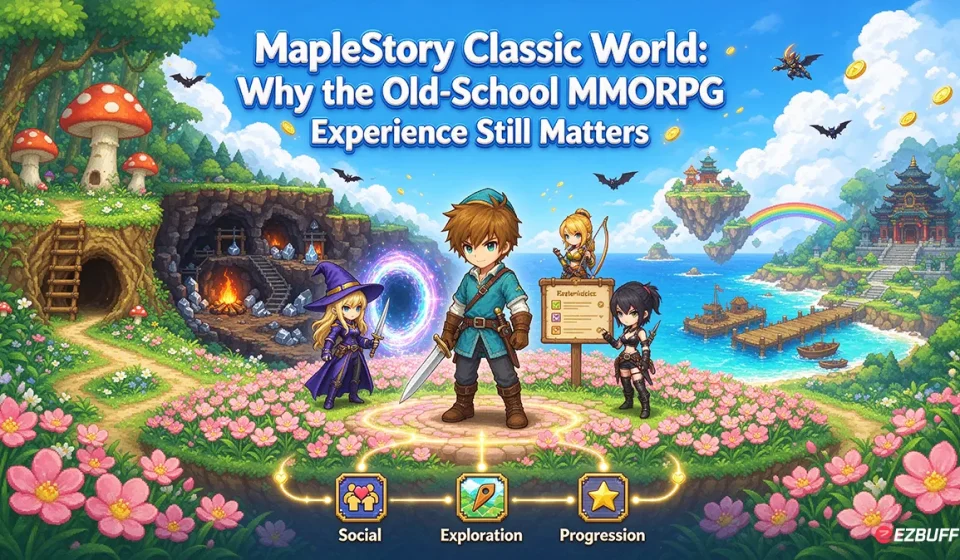
MapleStory Classic World: Why the Old-School MMORPG Experience Still Matters
Some MMORPGs are built around constant progression, daily missions, and an endless stream of rewards. Others leave a stronger impression through the small things: finding a new training spot, saving enough currency for better equipment, meeting other players on a crowded map, or finally reaching a milestone after hours of grinding. MapleStory Classic World aims to bring that old-school experience back into focus.
For players who remember the original appeal of MapleStory, the attraction goes beyond nostalgia. It is about returning to a style of MMORPG where character development takes time, resources matter, and the journey can be just as memorable as reaching the next level.
As interest in classic-style online games continues to grow, MapleStory Classic World raises an interesting question: can a slower, more community-driven MMORPG still compete in an era of convenience-focused progression?
The Appeal of Returning to Maple World
One of MapleStory’s most recognizable strengths has always been its distinctive world. Colorful environments, memorable monsters, class identities, and familiar town maps give the game a personality that many modern MMORPGs struggle to replicate.
Classic World appeals to players who want to rediscover that sense of exploration. Instead of treating every activity as a short step toward the endgame, the experience encourages players to pay attention to the process. Choosing a training location, learning how to manage health and mana, upgrading equipment, and planning a character’s development can all influence how smoothly the adventure unfolds.
This approach also changes the way players think about their time. A few levels gained during an evening session can feel meaningful when every upgrade requires preparation. Finding a useful item or earning enough currency for a long-awaited piece of equipment becomes a small achievement rather than another notification to clear.
For returning players, the familiar atmosphere provides an immediate connection. For newcomers, it offers a different perspective on MMORPG progression, one in which patience and preparation remain important parts of the experience.
Why Mesos Remain Central to the Experience
In MapleStory, Mesos are more than a number displayed in the inventory. Currency connects several parts of the game’s economy, from purchasing consumables and equipment to participating in player trading and preparing for more demanding areas.
That makes money management an important part of character progression. Spending everything on an immediate upgrade might improve combat performance, but it can also leave a player short of funds for potions, travel, or the next equipment purchase. Keeping a reserve, comparing prices, and understanding which drops have practical value can make a noticeable difference over time.
A sensible Mesos strategy starts with knowing what a character actually needs. Early in the journey, survival and affordable consumables may matter more than expensive gear. As a character develops, equipment upgrades and longer-term goals can take priority.
Players should also consider the relationship between farming efficiency and resource consumption. A monster that drops valuable items may not be the most profitable target if defeating it requires excessive potions or takes too long. A slightly easier training area can sometimes produce better results because the character spends less on upkeep and maintains a steadier farming rhythm.
These decisions are part of what makes a classic MMORPG economy interesting. Currency management rewards observation, planning, and an understanding of how individual choices affect long-term progress.
Building a More Efficient Mesos Farming Routine
Efficient farming does not necessarily mean playing for longer hours. Often, it means reducing wasted effort.
Start by choosing monsters that match your character’s current damage, accuracy, and defensive capabilities. Defeating enemies consistently is usually more useful than struggling against stronger opponents for marginally better rewards. As your equipment and skills improve, revisit older farming locations to see whether a more challenging area has become worthwhile.
Inventory management is another overlooked part of the process. Regularly review collected equipment and other drops, identify what can be sold or used, and avoid unnecessary trips that interrupt a productive session. Keeping enough space for valuable items can help make each farming run more efficient.
It is equally important to establish a clear spending plan. Before purchasing an upgrade, compare its benefits with the cost of maintaining your character. If an expensive weapon provides only a small improvement, saving those Mesos for a more meaningful milestone may be the better decision.
Players interested in external resources may also encounter searches for Buy MapleStory Classic World Mesos. Before considering any third-party service, check whether it supports the correct game version and server, review its delivery and account-security policies, and confirm that the transaction complies with the game’s current rules. Official trading systems and in-game farming remain the safer starting points for understanding the economy.
The objective is not to eliminate grinding altogether. It is to make the time spent in Maple World feel productive rather than repetitive.
The Social Side of a Classic MMORPG
A strong MMORPG economy is not sustained by currency alone. It also depends on the players who create demand, exchange resources, share information, and build communities around common goals.
Classic-style progression can make these interactions more meaningful. Players may need advice about training locations, recommendations for affordable equipment, or help understanding which items are worth keeping. Guilds and regular party groups can turn otherwise routine activities into shared experiences.
Trading adds another layer to that social structure. An item that has little immediate value to one character may be useful to another, while fluctuating demand can influence how players approach farming and saving. Learning the market becomes another skill alongside combat and character development.
For MapleStory Classic World to maintain long-term appeal, its community and economy will be just as important as its nostalgia factor. Players need reasons to return, interact, and work toward goals that feel relevant to their characters.
That is also why shortcuts deserve careful consideration. Faster progression can be appealing, but an economy works best when its trading rules are clear and its participants can trust the systems they use. A healthy balance between accessibility, fair play, and meaningful progression benefits the entire player base.
Is Buying Mesos Worth Considering?
The decision to purchase in-game currency depends on individual priorities, available time, and the rules governing the game. Some players enjoy earning every upgrade through farming, while others prefer to spend more time exploring different areas or developing their characters.
For anyone researching Buy MapleStory Classic World Mesos, the key is to evaluate the decision rather than assume that additional currency automatically improves the experience.
First, confirm that a service explicitly supports MapleStory Classic World rather than another version of MapleStory. Different versions can have separate economies, item systems, and trading restrictions. Next, review the game’s official policies regarding third-party transactions. Unauthorized currency purchases may create account-security risks or lead to penalties, regardless of how convenient a service appears.
Price should not be the only consideration. Transparent terms, credible support, clear delivery conditions, and protection of account credentials matter more than an unusually attractive offer. Never share passwords or verification codes with a currency seller.
Players researching marketplace options can look into EZBUFF as part of their broader comparison process. As with any third-party platform, independently verify its current game support, transaction conditions, and compatibility with the applicable game rules before making a decision.
Ultimately, the right approach is the one that fits your playstyle without putting your account or enjoyment of the game at unnecessary risk.
The Future of Classic MMORPG Progression
The renewed interest in classic MMORPG experiences reflects a broader shift in what some players want from online games. Not everyone is looking for instant access to powerful equipment or rapid completion of every progression system. Many still appreciate games that reward familiarity, persistence, and incremental improvement.
MapleStory Classic World has an opportunity to build on that appeal by making progression feel worthwhile, keeping its economy understandable, and giving players reasons to interact beyond simply leveling up. Nostalgia can attract an audience, but a sustainable community requires balanced systems, engaging activities, and a world that remains rewarding after the initial excitement fades.
Mesos sit at the center of that experience because they connect combat, equipment, trading, and personal goals. Learning to earn and spend currency wisely can make the adventure smoother, whether a player is returning after years away or discovering the world for the first time.
The most satisfying moments in a classic MMORPG are rarely defined by currency alone. They come from the upgrades that change how a character plays, the friends met along the way, and the feeling that every small achievement contributed to a larger journey.
For players ready to revisit that slower, more deliberate style of adventure, MapleStory Classic World offers a reason to think about what made the genre memorable in the first place: not just how quickly a character progresses, but how much the player enjoys getting there.