
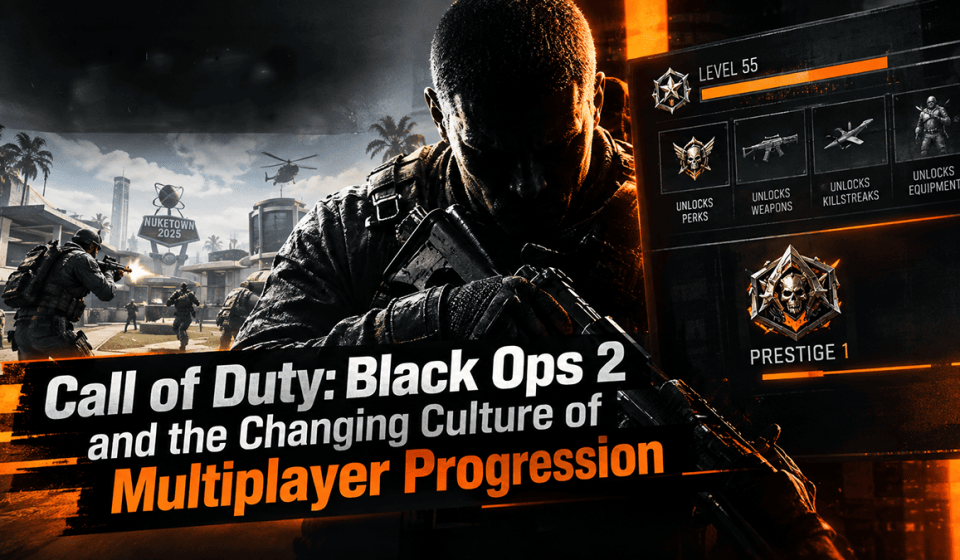
Call of Duty: Black Ops 2 and the Changing Culture of Multiplayer Progression
Few Call of Duty games have left quite the same impression on multiplayer culture as Call of Duty: Black Ops 2. Released in 2012, the game arrived at a time when progression, prestige, weapon challenges, and competitive multiplayer were becoming increasingly important parts of the Call of Duty identity.
More than a decade later, Black Ops 2 remains an interesting case study in how players think about progression. The weapons, maps, scorestreaks, challenges, and Prestige system created a constant reason to keep playing. But the way players approach those systems has changed dramatically over time.
For some returning players, the appeal is no longer simply winning matches. It is about revisiting an old multiplayer experience while making progression feel less demanding. That is part of the reason conversations around buy Call of Duty Black Ops 2 Bot Lobbies continue to appear among players looking for alternative ways to approach the game’s progression.
Why Black Ops 2 Multiplayer Still Feels Different
Black Ops 2 arrived during an important period for multiplayer shooters.
The game gave players a substantial amount of freedom in how they approached their loadouts. Pick 10 allowed players to experiment with weapons, perks, attachments, and equipment without forcing everyone into exactly the same setup.
That flexibility made progression feel personal.
One player might spend hours mastering an assault rifle, while another focused on SMGs, sniper rifles, or challenge-based unlocks. Scorestreaks added another layer by rewarding players for contributing to a match without making kills the only meaningful objective.
This design philosophy helped Black Ops 2 develop a multiplayer identity that still feels recognizable today.
Progression Was Part of the Experience
Modern Call of Duty games have expanded progression into enormous systems involving seasonal content, battle passes, weapon platforms, events, challenges, and rotating rewards.
Black Ops 2 was considerably simpler.
You played matches, unlocked weapons and attachments, completed challenges, earned XP, and eventually reached Prestige. The system was straightforward enough to understand but deep enough to keep players interested.
That simplicity is one reason the game remains attractive to veteran players.
However, progression can feel very different when returning to an older game. Players who have limited time may not want to spend dozens of hours repeating the same multiplayer grind just to experiment with particular weapons or challenges.
This is where the modern discussion around bot lobbies becomes interesting.
The Bot Lobby Conversation
The concept of bot-assisted multiplayer experiences has become increasingly familiar across the broader Call of Duty community.
For players interested in buy Call of Duty Black Ops 2 Bot Lobbies, the attraction is often less about avoiding multiplayer entirely and more about changing the pace of progression. A controlled environment can offer a different way to experiment with weapons, movement, loadouts, and challenge-oriented gameplay.
That said, bot-based experiences should be approached carefully. Players should consider the game’s rules, platform policies, and the potential risks associated with third-party services before spending money or sharing account information.
The broader trend is still worth examining because it reflects something important about modern multiplayer gaming: players increasingly value control over how they spend their limited gaming time.
From Competition to Custom Progression
One of the biggest changes in multiplayer culture is the relationship between competition and progression.
Older Call of Duty games often made progression feel inseparable from simply playing public matches. If you wanted XP, weapon levels, or challenges, you played against other players.
Today, players are more likely to think about progression as a separate objective.
Some want competitive matches. Others want to complete challenges. Some are interested in testing unusual builds. Others simply want to revisit a favorite game without committing to the same grind they experienced years ago.
Black Ops 2 sits at an interesting point between these two eras.
Its systems were designed around traditional multiplayer competition, but today’s players approach those systems with expectations shaped by years of live-service gaming.
Why the Black Ops 2 Community Keeps Coming Back
Nostalgia is certainly part of the equation, but it does not explain everything.
Black Ops 2 had an unusually strong combination of map design, weapon variety, movement, scorestreaks, and progression. Maps such as Nuketown 2025 became part of Call of Duty’s wider multiplayer history, while the game’s pick-and-choose loadout philosophy gave players considerable room to experiment.
There was also a certain immediacy to the experience.
You could enter a match, choose a loadout, earn points, unlock something, and immediately understand how your performance contributed to progression.
That clarity is something many modern multiplayer games sometimes struggle to reproduce.
The Role of Services Like EZBUFF
As gaming communities become more comfortable discussing alternative progression methods, platforms such as EZBUFF naturally become part of the conversation.
The important thing is to view these services through the lens of player needs rather than simply treating them as another gaming purchase.
For someone returning to Black Ops 2 after years away, the priority might be saving time. Another player may be interested in experimenting with different progression routes. Someone else may simply want to recreate the feeling of playing an older Call of Duty without approaching it exactly as they did in 2012.
Those are different motivations, and understanding them helps explain why the market around multiplayer assistance has continued to develop.
Black Ops 2 as a Snapshot of Multiplayer History
Perhaps the most interesting thing about Black Ops 2 today is not any individual weapon or map.
It is what the game represents.
Black Ops 2 came from an era when multiplayer progression was relatively compact and understandable. Modern games have transformed that formula into much larger ecosystems where progression can continue indefinitely.
The return of interest in older Call of Duty games shows that players still appreciate systems that are easy to understand and rewarding to master.
At the same time, the discussion around buy Call of Duty Black Ops 2 Bot Lobbies demonstrates how player expectations have evolved. People now have more choices in how they approach progression, and they increasingly look for experiences that fit their available time.
That makes Black Ops 2 more than just a nostalgic multiplayer shooter. It is a useful snapshot of how the culture surrounding competitive gaming has changed—and why some players continue to return to the classics when they want a simpler, more focused multiplayer experience.