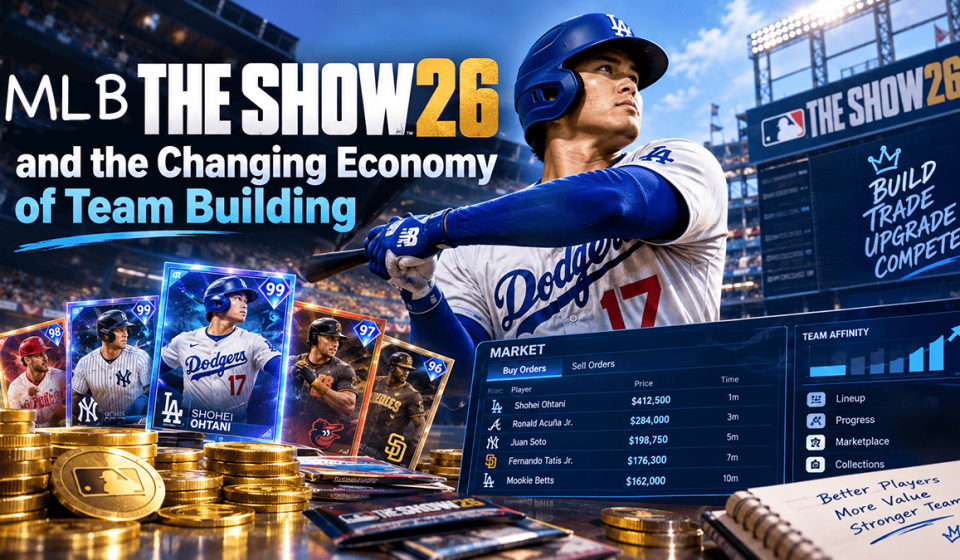
MLB The Show 26 and the Changing Economy of Team Building
For many players, MLB The Show has never been only about hitting home runs or throwing perfect pitches. A large part of the experience comes from building a roster that actually feels like your own. In MLB The Show 26, that process remains closely tied to how players earn, spend, and manage Stubs throughout the game.
That makes the in-game economy more interesting than it might appear at first. Stubs are not simply another currency sitting in the background. They influence roster decisions, market activity, player progression, and the pace at which a Diamond Dynasty team can develop.
Why Stubs Matter More Than Ever
Building a competitive Diamond Dynasty roster is rarely a one-time purchase. Players constantly face decisions about whether to upgrade a position, save for a more expensive card, invest in packs, or hold onto their resources for upcoming content.
This creates a simple but important principle: having Stubs is useful, but knowing when to spend them is even more important.
A player might find an impressive card on the market and immediately want to add it to the lineup. But if that purchase consumes most of the team’s available currency, it can also make future upgrades much harder. Experienced players tend to look beyond individual cards and think about the entire roster.
That is where MLB The Show 26 becomes an interesting exercise in resource management.
The Market Changes How Players Build Teams
The player market adds another layer to roster construction. Instead of progressing through a completely predetermined upgrade path, players can react to prices and decide what makes sense for their particular team.
A card that looks expensive today may become more accessible later. Likewise, a card that seems like an obvious bargain may lose some of its value when new content arrives.
This encourages players to pay attention to the broader Diamond Dynasty environment rather than simply chasing every new release.
For someone who is comfortable spending real money on virtual currency, there are also players who choose to buy MLB The Show 26 Stubs as a way to accelerate their progression. However, even in that situation, spending strategically still matters. More currency does not automatically create a better roster if it is used without a plan.
Team Building Is About More Than Overall Rating
One of the easiest mistakes in roster construction is treating overall rating as the only measurement that matters.
Baseball is much more situational than that.
A high-rated player may not necessarily fit the way you play. A hitter with excellent power might be less useful to someone who relies on contact and plate discipline. Similarly, a pitcher with impressive attributes on paper may not suit a player who prefers a particular pitch mix or pitching style.
This is why experienced Diamond Dynasty players often evaluate cards according to role rather than simply looking at the number attached to them.
A balanced roster can sometimes be more effective than a collection of individually expensive cards.
The Psychology Behind In-Game Spending
There is also a psychological element to the MLB The Show economy.
New content can create a sense that players need to upgrade immediately. Limited-time programs, new cards, market movements, and community discussions can all encourage players to spend their accumulated resources faster than originally planned.
Taking a step back can be useful.
Before making a major purchase, ask a few straightforward questions:
- Does this card solve an actual weakness on my roster?
- How long am I likely to use it?
- Will buying it prevent me from making two smaller upgrades?
- Is the current market price reasonable for my needs?
- Am I buying because the card fits my team or simply because it is new?
Those questions may sound basic, but they can prevent a lot of unnecessary spending over the course of a season.
A More Sustainable Approach to Diamond Dynasty
For long-term players, the goal is not necessarily to build the most expensive roster as quickly as possible. It is to maintain flexibility.
That can mean keeping a Stub reserve instead of spending everything immediately. It can also mean completing programs and challenges before turning to the market, allowing earned rewards to shape the next round of upgrades.
Players who decide to buy MLB The Show 26 Stubs should approach that decision with the same mindset. Currency should support a team-building strategy rather than replace one.
Third-party services such as EZBUFF may attract players looking for additional ways to manage their progression, but responsible players should always pay attention to platform rules, account security, and the risks associated with unauthorized transactions.
What MLB The Show 26 Says About Modern Sports Games
The bigger story here goes beyond MLB The Show 26.
Sports games increasingly combine traditional gameplay with economies built around cards, currencies, progression systems, and constantly changing content. That has transformed the way players think about building teams.
The modern sports-game player is not only playing games. They are also making economic decisions inside a virtual ecosystem.
MLB The Show 26 provides a particularly clear example because baseball itself is already built around statistics, valuations, trades, and roster management. The game’s team-building systems naturally reflect some of those ideas.
The result is a mode where understanding the economy can be almost as important as understanding the players.
Final Take
MLB The Show 26 rewards players who think beyond the next game.
Whether Stubs come from gameplay, programs, market activity, or a decision to buy MLB The Show 26 Stubs, the important part is how those resources are used. A thoughtful roster built around personal playstyle can remain useful far longer than a team assembled simply by chasing the newest high-rated cards.
For players who enjoy the strategy behind Diamond Dynasty, that may ultimately be one of the most interesting parts of MLB The Show 26: the challenge is not just creating a powerful team, but figuring out how to build one without losing sight of the bigger picture.